Here’s our latest round-up of news and insights about the future of cities and urban development.
You Should Know
- The global data center sector is projected to nearly double its capacity to about 200 gigawatts by 2030, driven largely by booming AI infrastructure demand and requiring roughly $3 trillion in investment, according to JLL.
- The U.S. population is projected by the Congressional Budget Office to grow by 15 million people over the next 30 years and to stop growing in 2056.
- The number of deaths could begin exceeding births in the UK in 2026, according to the Resolution Foundation, marking a demographic turning point in which deaths outnumber births every year by a widening margin.
Worth Watching
- This region is America’s hidden metropolis.
- Inside the world’s largest indoor vertical farm.
- See how much infrastructure is stuffed under the streets of Manhattan.
Top Stories
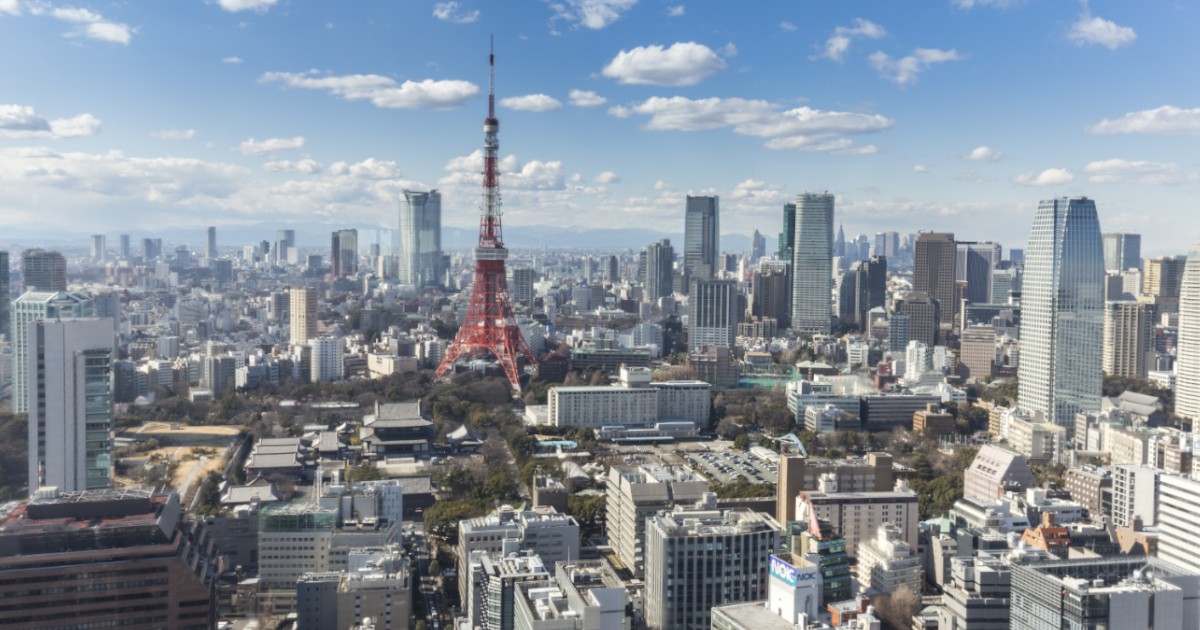
How Tokyo Saved Itself from Sinking
Sinking cities are among the most serious urban risks of the 21st century. Around two billion people live in areas affected by land subsidence—the sinking of the ground caused largely by groundwater extraction and soil compaction. Global economic exposure is vast, estimated at $8.2 trillion, or about 12% of global GDP, according to the United Nations.
Few cities illustrate this problem more starkly than Tokyo in the mid-20th century. But stay with us—this story has a rare happy ending.
During Japan’s postwar industrial boom, factories and a fast-growing population relied heavily on groundwater. By the 1960s, parts of Tokyo were sinking by as much as 24 centimeters (about 9.5 inches) per year—among the fastest rates ever recorded in a major city.
Parts of Tokyo subsided a staggering 15 feet in the twentieth century. In some districts, groundwater levels had fallen nearly 60 meters below sea level. The consequences were dramatic: floodwaters spread farther and lingered longer, and major typhoons exposed how vulnerable the city had become.
Tokyo’s response was unusually decisive. Instead of treating flooding and subsidence separately, policymakers went after the root cause: groundwater overuse. National laws passed in the 1950s and 1960s strictly limited industrial and building-related groundwater pumping, regulated well construction, and enforced reporting and penalties.
At the same time, Tokyo invested heavily in surface water infrastructure, expanding dams, treatment plants, and distribution networks to replace groundwater as the city’s primary water source. Today, hundreds of facilities supply water across the city. Even building owners are now required to include rainwater or reclaimed water systems in their environmental plans to reduce groundwater demand.
Complementing hard infrastructure, Tokyo mandated rooftop greenery and permeable surfaces on large developments, improving rainwater infiltration and supporting groundwater recharge. Continuous monitoring using wells and satellite data ensured problems were detected early.
The results were extraordinary. Tokyo became the first major city affected by subsidence to stabilize. By the early 1970s, subsidence rates had slowed sharply. Today, even in the hardest-hit areas, sinking has largely stabilized at around 1 centimeter per year or less. The city’s cumulative sinking has effectively plateaued, even as Tokyo continued to grow into one of the world’s largest and most complex urban economies.
Tokyo’s experience proves that strong regulation, long-term infrastructure investment, and coordinated governance can halt—and even reverse—severe land subsidence, offering a clear roadmap for megacities facing risks beneath their streets.
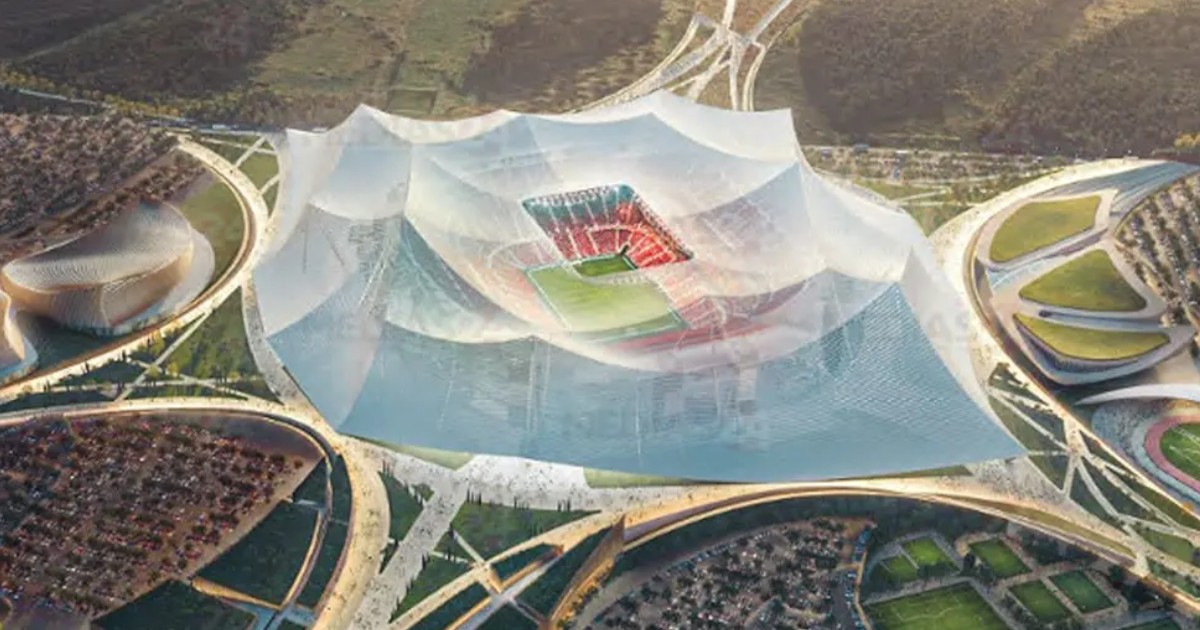
A New Sports Milestone: Building the World’s Largest Football (Soccer) Stadium
Rising north of Casablanca, the Hassan II Grand Stadium is reshaping the world’s football infrastructure.
With a planned capacity of 115,000 spectators—larger than any football-specific stadium ever built—the venue will meet full FIFA competition standards and is set to become a cornerstone of the 2030 FIFA World Cup, which Morocco will co-host with Spain and Portugal.
Momentum on construction accelerated after Morocco’s co-hosting role was confirmed in 2023 and public financing was approved. The total cost of the project is estimated at around 5 billion Moroccan dirhams (about $500 million).
Designed by Populous, the stadium draws deeply on Moroccan cultural references, including moussems, traditional tents, gardens, and the surrounding forested landscape. Its defining architectural feature is a vast, tent-like roof formed from a translucent aluminium lattice. The structure allows natural light to filter into the bowl while providing shade and limiting heat gain—an essential performance consideration at this scale.
Encircling the stadium is a ring of 32 monumental stairways, which form part of the roof’s structural system while also managing the movement of tens of thousands of spectators on event days.
The stadium’s immense scale is most apparent in its bowl, where three towering tiers at each end alone can accommodate nearly 29,500 spectators. Linking the two ends are five elevated hospitality levels, offering more than 12,000 premium seats for VIPs and box guests. Integrated within the complex is a purpose-built Royal Box, reflecting Morocco’s monarchy and designed to host heads of state and dignitaries during major global events.
Throughout the structure, elevated botanical gardens are woven into circulation routes, creating the impression that visitors remain immersed in nature as they move toward their seats. These green elements double as passive cooling features while expanding public green space within the stadium itself.
Once complete, the stadium will serve as the home ground for the Morocco national team as well as Casablanca rivals Raja CA and Wydad AC. Beyond football, the wider site is planned to include an athletics stadium, aquatic center, hotel, convention facilities, and landscaped public areas, positioning the project as a long-term sports and civic hub rather than a single-event venue.
Chicago’s Megadevelopments: Slow Builds, Hard Reset
Chicago’s appetite for bold development is best captured by megaprojects like The 78 and Lincoln Yards, two of the most ambitious proposals in the city’s modern history. Yet scale alone does not guarantee momentum. Both projects have faced strong market headwinds. Below is an overview of where each project stands.
The 78 is Chicago’s most prominent megadevelopment, planned as a 62-acre, $7 billion neighborhood on the largest undeveloped parcel in the city’s south downtown. Envisioned as the first new Chicago neighborhood in a generation, it is designed as a mixed-use riverfront district.
The project is being developed by Related Midwest, which acquired the long-vacant former rail yard site in 2016 after decades of unrealized proposals. Plans call for housing, retail, cultural venues, seven acres of green space, a five-acre sports park, major transit connectivity, and an open urban campus focused on innovation, education, and entrepreneurship.
Despite the large-scale plans, progress has been uneven. While the project received city approvals and zoning in 2019, most vertical development has yet to materialize. Infrastructure and site preparation work are underway, but no major residential or office towers are complete.
The strongest boost to momentum is the recent announcement of a privately financed, 22,000-seat stadium for Chicago Fire FC, expected to break ground in early 2026 and open in 2028. Even with this catalyst, The 78 remains a long-term, phased development likely to build out through the 2030s.
On Chicago’s North Side, Lincoln Yards was proposed as a $6 billion mixed-use development spanning roughly 53 acres between Lincoln Park and Bucktown. Led by Sterling Bay, the project envisioned up to 14.5 million square feet of high-rise towers, offices, retail, entertainment venues, infrastructure upgrades, and a potential extension of The 606 trail.
Despite receiving City Council approval in 2019, progress proved slow. Pandemic-era market shifts stalled momentum. By 2023, only one building—the Ally life sciences facility—had been completed, and it remained unleased into 2025. Mounting financial pressure led Sterling Bay to surrender the northern portion of the site to its lender in early 2025.
That land is now being redeveloped as Foundry Park, a scaled-down, housing-led neighborhood planned for roughly 2,800 homes, new riverwalks, expanded park space, affordable housing, and an extension of The 606.
The southern portion of Lincoln Yards, meanwhile, is being sold by Sterling Bay and J.P. Morgan Asset Management to Novak Construction, which has not yet released detailed redevelopment plans.
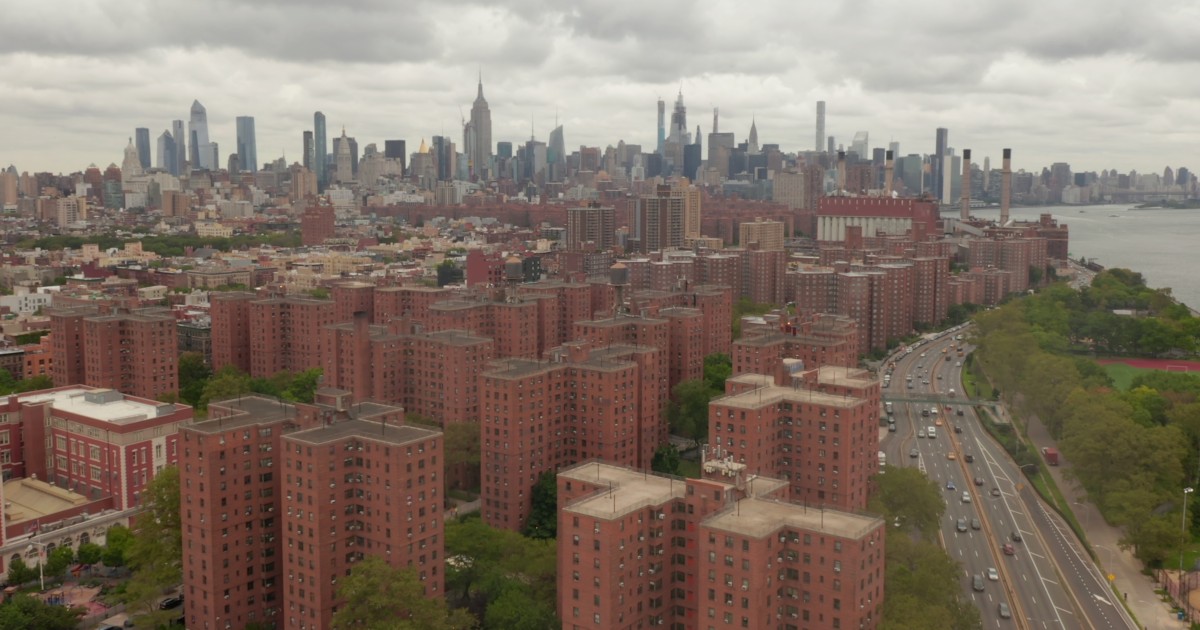
NYC’s Housing Crisis Meets a Mayor in a Hurry
All eyes are on New York City’s new mayor, Zohran Mamdani, and how quickly he can fix the city’s housing crisis. Judging by his first week in office, he wasted little time, launching a sweeping set of executive moves.
Elected on a housing reform platform amid one of the tightest rental markets in decades, Mamdani entered office facing a citywide vacancy rate of just 1.4%—the lowest since 1968. Rather than signaling intent or commissioning long-term studies, his administration moved immediately to restructure how the city unlocks land, processes permits, and enforces tenant protections. In just days, the mayor issued multiple executive orders and administrative actions designed to address housing supply and renter conditions simultaneously.
Since taking office on January 1, Mamdani has taken the following housing-related actions:
- Created the LIFT Task Force (Land Inventory Fast Track) to review city-owned properties and identify sites suitable for housing development by July 1, 2026, aiming to accelerate supply and reduce development costs.
- Established the SPEED Task Force (Streamlining Procedures to Expedite Equitable Development) to identify and remove bureaucratic and permitting barriers that slow housing construction and delay lease-up.
- Revitalized the Mayor’s Office to Protect Tenants, restoring it as a central coordinating body to defend tenants’ rights, confront negligent landlords, and push agencies to act quickly on unsafe or illegal housing conditions.
- Ordered the launch of public “rental ripoff” hearings, providing residents with a formal forum to report illegal, unfair, abusive, deceptive, or unconscionable landlord practices.
- Mandated that city shelters again comply with health, safety, building, and zoning laws, ending a 2025 pause on shelter standards and directing agencies to develop a 45-day compliance plan.
- Directed city intervention in the bankruptcy proceedings of Pinnacle Realty, a landlord tied to more than 14,000 tenant complaints and unpaid debts across 83 buildings. On Jan. 8, however, a federal bankruptcy judge rejected the administration’s attempt to delay the sale.
Together, these first-week actions reflect a rapid push to reshape New York City’s housing landscape, combining land use reform, administrative streamlining, tenant protections, and direct intervention in troubled landlord cases.
Big Deals
- Related, Oxford obtain $1.6B construction financing for 70 Hudson Yards.
- Seattle’s Avalanche Energy raises $14.9M for fusion technology.
- TPG strikes $1B deal for majority stake in Lennar’s multifamily operations.
- Jacobs acquires remaining stake in PA Consulting for $1.6B.
- QXO secures $1.2B for potential acquisitions and expansion.
- JRK Realty acquires a $400M multifamily portfolio.
- Summit Properties wins auction to acquire 5,100 rent-stabilized NYC apartments.
Extra Reads
- Saudi Arabia opens property market to foreign buyers.
- xAI plans to invest $20B in Mississippi data center.
- Ethiopia begins $12.5B construction of Africa’s biggest airport.
- Trump plans to ban institutional investors from buying single-family homes.
- Diriyah Company partners with Midad to build $827M Four Seasons project.
- Hanoi maps out 100-year vision and new growth model.
- Plans for Potomac Overlook propose 1,775 residential units in Rosslyn, Virginia.
- China launches world’s first gigawatt-hour-scale flow battery project.
- Micron Technology announces date groundbreaking date for $100B megafab facility in New York state.
- California High-Speed Rail announces plans to seek private investment.
- Zanzibar plans crypto-backed “network state” cyber city experiment.
- Waymo unveils updated Ojai robotaxi minivan.