Here are the biggest developments and emerging trends shaping the future of cities.
You Should Know
- Japan committed $36 billion to major U.S. energy infrastructure projects, including a 9.2-GW natural gas power plant in Ohio and a deepwater oil export port in Texas, as part of a broader trade deal.
- New Jersey and Illinois have the highest property taxes in the U.S., with effective rates typically exceeding 2% of a home’s value each year. In Europe, the U.K. often has the heaviest overall property tax burdens, largely due to the Stamp Duty Land Tax, which can reach 12% or more of a property’s purchase price.
- After 144 years, the Sagrada Familia reached its full height of 172.5 meters last Friday, as the final cross was installed atop its central tower, making it the world’s tallest church.
Worth Watching
- See ‘Pyonghattan’: North Korea’s modern new skyscraper district.
- Every metro system should be this beautiful.
- Why it’s so hard to know where the utility pipes are.
Top Stories
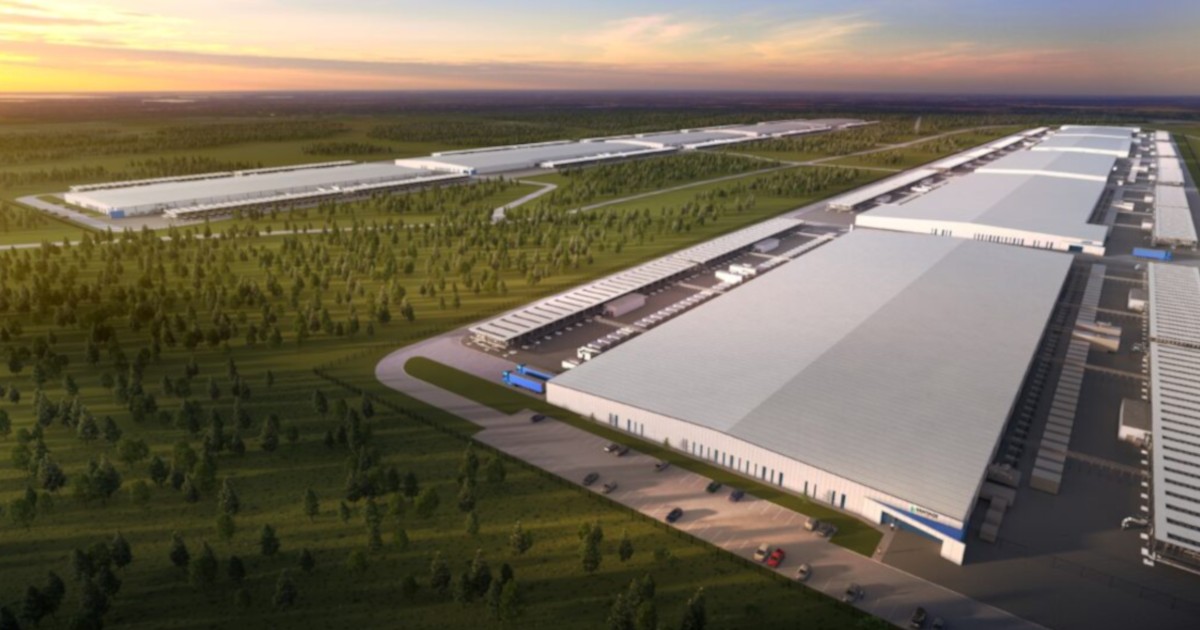
Texas to Dethrone Virginia as World’s Data Center King
Northern Virginia has long held the title of the world’s data center capital, with roughly 70% of global internet traffic flowing through the region. But Texas is now on track to overtake Virginia as the largest U.S. data center market by 2030.
A recent report from JLL shows Texas currently has 6.5 gigawatts (GW) of data center capacity under construction, giving the state a significantly larger pipeline than Virginia.
Across North America, the sector is expanding at an unprecedented pace. More than 35GW of data center capacity is under construction — roughly equal to the United Kingdom’s electricity demand. Nearly 64% is concentrated in emerging markets like Texas, Tennessee, Wisconsin, and Ohio, signaling a shift away from traditional hubs such as Northern Virginia and Silicon Valley.
This rapid expansion is being driven by extraordinary demand. U.S. data center vacancy rates remained at just 1% for the second consecutive year in 2025, while 92% of capacity under construction has already been pre-leased. Most tenants are securing space years in advance, often targeting delivery timelines in 2027 or later.
Power availability has emerged as the defining factor shaping where new data centers are built. Developing new generation capacity takes years, and building transmission infrastructure requires significant time as well. Grid connection timelines can stretch four years or more, pushing many large-scale deployments into the late 2020s.
These constraints are encouraging developers to pursue long-term projects, build-from-scratch campuses, and deploy on-site energy generation strategies.
Texas aligns closely with these development needs, offering a favorable business environment for strategic planning alongside extensive energy resources and strong electricity generation capacity. The state’s main power grid (ERCOT) provides access to diverse fuel sources and allows greater flexibility to add new generation. Texas also benefits from robust transmission infrastructure, excess generation capacity, and the ability to bring new energy supply to market quickly.
Beyond its energy advantages, Texas offers vast amounts of developable land and a supportive operating environment for constructing massive data center campuses. More than 10 hyperscale campuses have already been announced statewide, with additional proposals in development. The Austin area alone has more than 20 data center projects underway or planned.
Major projects highlight the scale of investment underway. Vantage Data Centers has broken ground on its $25 billion “Frontier” campus, delivering 1.4GW of AI capacity. HyperGrid near Amarillo, developed by Fermi America and the Texas University System, is the world’s largest planned data center complex with 11GW capacity. Planning is also underway for GW Ranch, an 8,000-acre Pecos County campus designed as a 7GW+ “shadow grid” facility.

Glydways Pushes Driverless Pods as Future Mass Transit
Glydways is pioneering a new form of public transportation built around autonomous electric vehicles operating on dedicated guideways, with recent pilot projects signaling progress toward real-world deployment.
The company is developing an Automated Transit Network that uses compact, fully autonomous electric vehicles to provide private, point-to-point travel. The system operates on narrow, dedicated routes known as guideways, which function similarly to rail infrastructure but are designed to be faster to deploy and up to 90% cheaper to build.
The company describes the system as a “disaggregated” approach to mass transit, replacing large shared vehicles such as buses or trains with small autonomous vehicles that are deployed only when passengers request a ride. Each vehicle typically carries between one and six passengers and travels at speeds of up to 50 km/h (31 mph). The vehicles are equipped with 20 high-resolution LiDAR sensors, advanced radar systems, and high-definition cameras, and operate using artificial intelligence software that manages traffic flow and safety in real time.
Riders can request trips through an app or kiosk, receiving a private vehicle that travels directly to their destination without intermediate stops or shared passengers. Despite offering a private ride experience, fares are designed to be comparable to bus or train tickets.
Glydways says the system can transport about 10,000 passengers per hour per lane using guideways roughly two meters wide, similar in size to a bike lane. The company claims this enables rail-level capacity with significantly lower capital investment while operating without subsidies. Dedicated guideways also allow vehicles to operate independently of road traffic, reducing congestion and improving reliability.
The company has recently made progress toward real-world deployment. In South Metro Atlanta, Glydways broke ground on its first publicly accessible Automated Transit Network demonstration pilot. The system will connect the ATL SkyTrain at the Georgia International Convention Center to the Gateway Center Arena along a 0.5-mile guideway, with free, on-demand rides expected to begin in December 2026.
Internationally, Glydways has signed agreements with Dubai’s Roads and Transport Authority to launch an autonomous transit network in the Bluewaters area, with plans to expand across four corridors connecting major destinations and transit systems. Trial operations for the first route are expected to begin within months.
How South Australia Made Power Prices Plunge
South Australia has emerged as one of the world’s most notable examples of an economy transitioning to renewable energy while significantly lowering electricity costs.
The state, Australia’s fourth largest and home to 1.9 million people, generated 84 percent of its electricity from solar and wind in the final quarter of 2025, the highest share of any major grid globally. State officials aim to reach 100 percent renewable power by the end of 2027.
In late 2025 and early 2026, South Australia recorded the lowest wholesale electricity prices in Australia, averaging AUD $37 per megawatt-hour — a staggering 30 percent drop from the previous year, according to the Australian Energy Market Operator. At times, the state produced more renewable electricity than it could use, leading to negative wholesale power prices nearly half the time in late 2025.
During some periods, rooftop solar alone supplied more than 100 percent of the state’s total electricity demand. For several hours at a time, every light, refrigerator, and factory in South Australia was powered entirely by solar panels installed on homes.
How did this happen? South Australia is widely regarded as a global leader in integrating renewable energy with grid-scale storage.
A key factor behind these price reductions has been large-scale battery deployment. South Australia has built seven mega-batteries, each roughly the size of a football pitch. These batteries store surplus energy generated by solar and wind farms and supply backup power when renewable generation declines. The Hornsdale Power Reserve in the mid-north region of South Australia is considered the world’s largest lithium-ion battery system.
Additional renewable capacity has also contributed to falling costs. The 412-megawatt Goyder South Wind Farm, the largest in the state, began operating in October and is expected to increase South Australia’s wind generation by 20%.
The transition is further supported by widespread adoption of distributed energy systems. More than half of South Australian homes now have rooftop solar panels, and about 50,000 households have installed home batteries. Together, these systems form the world’s largest virtual power plant. South Australia also has the highest number of home batteries per capita in Australia.
However, South Australia’s success should be viewed with caution, as its achievements may not be easily replicated elsewhere. The state benefits from exceptional wind and solar resources, including strong coastal wind speeds and high solar radiation. Its low population density provides abundant land for large projects, while its relatively small population and limited industrial demand make its energy system easier to transform.
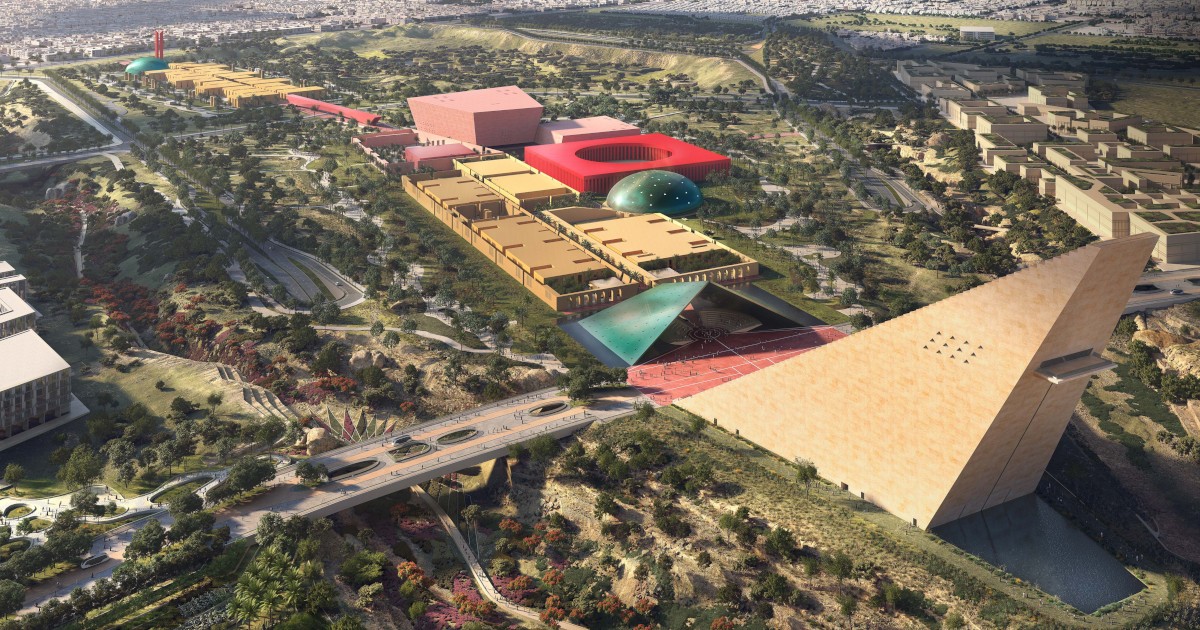
Saudi Arabia Builds the World’s Largest Urban Park
Saudi authorities are preparing to open what they describe as the world’s largest urban park. The first phase of King Salman Park in Riyadh is set to open in 2026, marking a major milestone in Saudi Arabia’s push to transform its capital.
Located on the site of the former Riyadh Air Base, King Salman Park is being developed as part of Saudi Vision 2030. The project spans more than 17.2 square kilometers, with a planned area roughly five times the size of London’s Hyde Park and four times that of New York’s Central Park. The development is expected to cost $23 billion in government funding and leverage an additional $15 billion in private sector investment.
The first phase will introduce major sections of green space, walkways, and initial facilities. A defining element of the park’s master plan is a system of branching valleys inspired by natural wadi riverbeds, designed to create shaded corridors and cooler microclimates suited to Riyadh’s desert environment. The landscape will include more than one million trees, supported by soil regeneration and irrigation systems that use treated wastewater.
The park will also include the Royal Arts Complex, intended to serve as a major arts and cultural hub for the city. The 500,000-square-meter complex will feature the National Theater with a 2,300-seat capacity, the Museum of World Cultures, art academies, and exhibition venues. Additional elements planned for the park include a visitor pavilion, sports facilities, and open event spaces.
King Salman Park reflects a large-scale effort to repurpose obsolete infrastructure into a public asset while promoting climate-responsive design. Its planting strategies, water recycling systems, and passive cooling measures aim to reduce the urban heat island effect and support biodiversity. The project is also intended to expand Riyadh’s green space from 1.5% to 9.1%.
Integration with the city’s transport network is another key component of the project. King Salman Park will connect to major roadways, multiple Riyadh Metro stations, and the bus network, while also featuring an internal mobility system that includes a traffic-free urban loop designed for walking, cycling, and autonomous transportation.
Construction began in late 2021, and additional development phases are expected to continue through 2030, gradually introducing further cultural, recreational, and mixed-use components.
Big Deals
- Lydian Energy raises $689M for U.S. solar and battery storage projects.
- DG Matrix obtains $60M to improve data center power management.
- Real estate investment company Kennedy Wilson is being acquired for $1.65B.
- Host Hotels & Resorts sells iconic Four Seasons locations for over $1B.
- Heron Power raises $140M to scale production of solid-state transformers.
- Statiq secures $18M to expand EV charging infrastructure.
- Related Ross lands $157M construction loan for more West Palm Beach condos.
Extra Reads
- Reliance invests $110B in India’s AI infrastructure, aiming for global leadership.
- Vietnam is constructing the world’s largest football stadium.
- Google’s DeepMind now plans and designs city infrastructure.
- Saudi Arabia reshapes Vision 2030 around new priorities.
- Waymo and Tesla’s robotaxis still depend on human oversight.
- India clears $10B Great Nicobar infrastructure project citing environmental safeguards.
- Toll Brothers to build a large age-restricted community in Exton.
- DataVolt plans 1.5GW data center in Neom’s Oxagon.
- China launches world’s first AI satellite for smart urban development.
- Boulder’s modular factory will build affordable homes for wildfire recovery.
- Hanoi plans to relocate over 860,000 residents for urban restructuring.
- Saudi ACWA Power invests $5B developing 5GW renewables in Turkey.
- World’s largest hybrid pumped-storage power project hits key milestone.
- Tesla’s no-steering-wheel, no-pedals Cybercab enters production.