Here are the latest major stories and trends shaping the next chapter of urban development.
You Should Know
- Of all places, Texas is pumping the brakes on data centers. Gov. Greg Abbott ordered an audit of the state’s data center interconnection queue — 474 GW, over five times peak grid demand — prompting ERCOT to delay its review process and putting 20% of the U.S. data center pipeline at risk.
- Italy-based Enel Green Power is the world’s largest private renewable energy company. It manages approximately 68 GW of renewable capacity across wind, solar, hydro, geothermal, and storage across five continents.
- U.S. homeowners insurance premiums continue to spike. The West saw (inflation-adjusted) premiums rise 43% and the Southeast 27% since 2018, according to a National Association of Insurance Commissioners report.
- Santa Cruz, CA is the most expensive rental market in the U.S.
Worth Watching
- The urban design that makes heat bearable.
- Why this vertical farm is 500x more efficient than farming.
- The Los Angeles Aqueduct is wild.
Top Stories

California Passes a Solar Threshold No Other Major Economy Has Hit
California recently reached a striking energy milestone. For one month last spring, the state generated more than half of its electricity from the sun. Not for a day, not for a week, but for a full month.
The milestone came in May, according to an analysis of U.S. Energy Information Administration data conducted by Ember, a UK-based group that promotes renewable energy and tracks power generation. It’s believed to be the first time a large economy has surpassed 50% solar generation for an entire month.
The achievement extends beyond that single month. For the first five months of 2026, California produced more electricity from solar than from natural gas. That raises the possibility that 2026 could be the first year solar outpaces gas overall.
The growth trajectory has been steep. A decade ago, in May 2016, already California’s strongest month for solar at the time, solar made up just 17% of the state’s electricity. In ten years, that share roughly tripled to reach 51%.
Ember credited battery storage with making the shift possible, noting that batteries now shift large amounts of midday solar output into the evening peak. Since 2020, battery capacity in California has grown from 500 megawatts to 16 gigawatts, and during parts of the night, batteries alone can cover more than a quarter of the state’s total electricity demand.
By 2026, California had roughly 23 gigawatts of utility-scale solar capacity, trailing only Texas. But once rooftop and other small-scale systems are counted, the state’s total of more than 43 gigawatts is the largest in the country.
Several other factors contributed to May’s record. The SunZia wind project in New Mexico began sending electricity to California in April, easing the need to burn gas. May’s mild temperatures also meant lower overall energy demand. Since then, however, gas use has climbed again as summer heat has set in.
Nevada appears to be the next state likely to cross the halfway mark. Its solar share exceeds 40% of in-state generation during peak spring months, but Nevada exports nearly 40% of the solar power it produces to California.
It is worth noting that China, the global leader in solar power, has not yet reached the threshold of generating more than half of its electricity from solar. The country leads the world by a wide margin in total solar capacity and annual installations, but solar accounts for only about 10% to 15% of its total electricity generation annually, while coal still supplies more than half of its power grid’s needs.
How Uber Plans to Win the Autonomous Vehicle Market Without Building a Car
Uber has grand plans to lead the autonomous vehicle (AV) market, but it’s betting on becoming the platform that AV companies plug into, rather than building self-driving technology itself. To that end, Uber pledged during last week’s earnings call to spend more than $10 billion to expand its robotaxi network.
The ride-hailing company aims to deploy 120,000 driverless vehicles on public roads while expanding its autonomous service footprint from 7 cities today to 15 by year-end, with a broader goal of reaching 28 global markets by 2028.
CEO Dara Khosrowshahi framed the capital push as part of Uber’s ambition to become the world’s leading commercialization platform for autonomous driving, backed by a customer base of 200 million riders. To execute the strategy, Uber has struck partnerships and direct investment deals with more than 30 autonomous technology developers, vehicle manufacturers, and fleet operators.
Uber’s most capital-intensive bet may be its premium robotaxi push with Nuro and Lucid. Uber has invested a combined $500 million in Lucid and committed to buying a minimum of 35,000 Gravity SUVs, which will run Nuro’s self-driving system, with San Francisco launching first and Houston to follow.
Rivian is a larger wager still: a deal worth up to $1.25 billion calls for Rivian to build robotaxis on its R2 SUV platform, rolling out in San Francisco and Miami in 2028.
Uber also has several smaller pilots underway domestically. May Mobility remains its only AV partner in Arlington, Texas. Motional’s Hyundai Ioniq 5s serve five areas of Las Vegas, still with safety monitors on board. And Avride’s robotaxis have launched in Dallas, alongside its Uber Eats delivery robots in Dallas and Austin.
Overseas, Uber has leaned on regional partners to move quickly. WeRide’s robotaxis went driverless in Abu Dhabi in November 2025 and have since launched in Dubai. In Europe, Momenta and Pony.ai are each building out service, with Pony.ai set to launch a commercial robotaxi in Zagreb, Croatia. Wayve, meanwhile, has cleared a licensing hurdle in London.
Not all partners are sticking around, though. Waymo has notified Uber that it intends to end their exclusive partnership in Austin and Atlanta by early 2028. In response, Khosrowshahi emphasized that Uber wants to avoid over-reliance on any single supplier as it expands ties with other developers.
For now, AV trips represent less than 0.5% of Uber’s 300 million weekly trips worldwide. By comparison, Waymo alone provides more than 500,000 trips weekly across 11 metropolitan areas through its own app and partner networks.
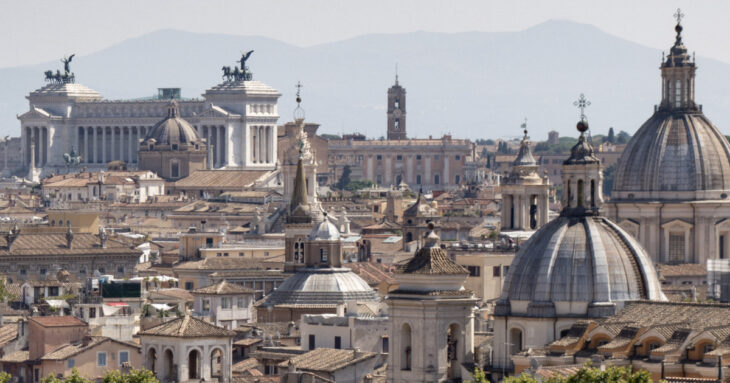
Rome’s Master Plan Gets Its First Overhaul in Nearly 20 Years
Rome’s Master Plan, introduced in 2008, is getting its first major reboot. The city has updated the technical rules underpinning the plan, amending 67 articles in a bid to unlock stalled investment and revive redevelopment across roughly 9,000 hectares of outlying areas where regeneration programs have never gotten off the ground.
Master plans in major European cities are strategic, spatial guides that govern a municipality’s land use, zoning, density limits, building heights, public space requirements, and infrastructure strategy. These plans are highly complex and, compared to plans in the U.S., tend to be strongly legally binding. Rather than scrapping a master plan every decade, European cities usually keep the same foundational framework in place for 15 to 20 years, updating it as needed through targeted statutory amendments, such as Rome’s revision of 67 technical articles.
The revisions target the Technical Implementation Regulations (NTA), which govern how Rome’s Master Plan (Piano Regolatore Generale) is applied. The changes address building replacement, changes of use, social housing, building credits, and the regeneration of derelict properties.
On the 9,000 hectares specifically, officials said these outlying areas stalled because the 2008 Master Plan required large-scale regeneration to move through complex, multi-layered bureaucratic programs, leaving dilapidated sites and abandoned industrial complexes untouched for a long time.
The new NTA aims to kick-start these projects by splitting the approach by scale: smaller areas can move forward through direct implementation, while larger projects will use agreed planning permission instead of the traditional regeneration-program process that had been the bottleneck.
A central goal of the reform is reducing administrative risk for developers. Roman officials pointed to Milan, where several major real estate projects were frozen after prosecutors argued that local approvals conflicted with national building codes. Rome’s revision aligns municipal rules with national legislation to help developers avoid similar legal challenges.
The reform also introduces substantial density incentives, including a bonus of up to 35 percent for projects that use an implementation plan in more complex outlying areas. Those incentives are conditional on improvements to environmental performance.
Additionally, a new 10 percent social housing quota will apply to changes of use, alongside a “development contribution” charge on investors, which can help fund housing policies such as flat purchases and rental incentives.
Other provisions include a single register of building rights and a new option allowing owners to demolish dilapidated or unsafe buildings without an immediate obligation to rebuild, while retaining the associated building rights.

The 2032 Summer Olympics Is Six Years Out. Brisbane Better Start Building
The Brisbane Olympics countdown clock is exposing a familiar problem: lofty host-city ambitions colliding with the realities of construction, cost and time.
Brisbane officials unveiled a new countdown clock on July 23, marking six years until the Games. Yet nearly five years after Brisbane was awarded the Olympics, major construction has not begun on the proposed 63,000-seat main stadium at Victoria Park, a project estimated at about US$2.6 billion.
Brisbane’s approach to the Olympic build-out diverges sharply from its two immediate predecessors, Los Angeles (2028) and Paris (2024), both of which avoided building much new infrastructure. Brisbane’s plan, by contrast, calls for a purpose-built main stadium, a new aquatics center, and more than a dozen other venues still moving through design and validation — none of it under meaningful construction six years out.
Los Angeles 2028 adopted a “no-build” strategy from the start: no new permanent venues, relying instead on existing infrastructure like Dodger Stadium, SoFi Stadium, Crypto Arena and the Rose Bowl, alongside UCLA and USC for the Olympic Village and media operations. That approach has kept LA’s privately funded budget at roughly US$7 billion.
Paris 2024 took a middle path, predominantly reusing or adapting existing venues while still building a smaller number of new facilities. That Games ultimately cost about US$8.7 billion, a 115% overrun over its original bid, but it avoided the years-long construction-timeline uncertainty Brisbane now faces.
Queensland recently released draft concept images for the Victoria Park precinct surrounding the stadium. The main stadium sits at the center of a broader transformation of the park, with the Queensland government proposing an Olympics precinct that includes the stadium, a new National Aquatic Center, expanded wetlands, an outdoor amphitheater and new bridges. The stadium and aquatics center are part of a US$5.1 billion Olympic venues infrastructure package.
The vision is substantial, but so are the unresolved questions. The government has not released a cost estimate for the broader Victoria Park precinct. Meanwhile, the National Aquatic Center is still being revised for budget reasons. Critics say the precinct concept lacks answers on parking, roads, rail connections and crowd-management space.
The Brisbane 2032 organizing committee remains confident that six years is sufficient, with officials pointing out that the project is not yet at “6 minutes to midnight.” But the clock is running. With major venues still being redesigned, costs still being reassessed, and construction only beginning to move forward, Brisbane is entering the stage where the grand Olympic vision has to become a detailed, funded and buildable reality.
Big Deals
- Dream Finders Homes acquires Beazer Homes for $2.2B, creating the sixth-largest U.S. homebuilder.
- Base Power raises a $1B Series D, launching its home battery built in the U.S.
- Ken Griffin and Vornado obtain $3.3B loan to build Park Ave tower, the largest single-building construction loan in NYC history.
- TotalEnergies acquires Shell’s onshore renewables business.
- PCCP and Integrity Community Builders form $200M JV to develop build-to-rent communities.
- LMXD and BedRock secure $250M to build a 560-unit Queens housing project.
- Sonnedix secures €730M financing to expand solar and BESS across Southern Europe.
- Moove raises $250M to scale the global infrastructure layer for autonomous mobility.
- TPG AG Real Estate and Redfearn Capital acquire industrial portfolio for $628M.
- Valar Atomics raises $1B to advance small modular nuclear reactors.
Extra Reads
- Four simple rules behind Japan’s most livable cities.
- Trump administration’s latest buyback of offshore wind leases brings total to nearly $4 billion.
- PJM’s reformed interconnection process will review 200 GW of new energy generation projects.
- JPMorgan plans to invest $750B to grow the U.S. housing supply and homeownership.
- One of Europe’s most complex marine engineering projects, the $922M Genoa Undersea Tunnel, gets a project lead.
- SpaceX and Tesla plan to initially spend $16.8 billion on the Terafab chip plant in Texas.
- Porvoo, Finland, deploys an autonomous street sweeper.
- Lesotho approves $6.2B hydropower and data center project, the largest foreign direct investment in the country’s history.
- Hanoi moves toward a “sponge city” model to reduce flooding.
- California’s $2.8B Anderson Dam rebuild moves into construction.
- Hyundai wants to be a physical AI company, not just a carmaker.
- Amtrak unveils proposal to restructure, splitting into three divisions.
- Kentucky town places factory-built houses on vacant lots the city already owns.
- What happened when Ontario turned off its speed cameras.
- LA Metro pays residents up to $600 to leave their car at home.