Your weekly look at the trends and news reshaping our cities and urban life.
You Should Know
- Public transit emerged as a major winner in the U.S. midterms, with voters approving 85% of ballot initiatives, unlocking $27B in long-term dedicated revenue and pushing total 2026 transit funding past $31B.
- The most consequential U.S. data center policy vote comes November 17, when Virginia’s Loudoun County Board of Supervisors considers a 12-month pause on final approvals for new data centers. The Board advanced the proposal in September but hasn’t formally adopted it. Northern Virginia, widely considered the world’s data center capital, hosts more than 250 data centers.
- Kenya has emerged as a leading geothermal electricity producer. Geothermal energy accounts for more than half of the country’s electricity generation, thanks to its abundant underground volcanic heat.
- A Streetlight Data report on the 100 largest U.S. cities found Americans walk seven times more miles annually than they bike, with Boise and New York leading in cycling per capita while Orlando and Boston top the pedestrian rankings.
Worth Watching
- You can now buy a Disney home: Inside Storyliving by Disney.
- Aridge’s land aircraft carrier, a modular flying car.
- Egypt’s $27B urban megaproject: The Spine.
Top Stories

What Now for Data Center Construction?
Last week’s U.S. midterm elections handed the data center industry its toughest challenge yet. Of the more than 40 local ballot measures restricting development in 10 states, all but one passed, according to Ballotpedia.
The statewide results matter more. In Texas, Gina Hinojosa won the governor’s race on a pledge to impose an immediate moratorium, putting roughly 13 GW of announced projects at risk. The new governors of Georgia and Ohio also campaigned on pausing data center construction.
Despite the electoral backlash, analysts point to five areas where construction still looks likely:
- Data centers that already have power. The safest bets are campuses with power, permits and approvals in hand. Meta president Dina Powell McCormick told a Wall Street Journal conference that expansions should stay relatively easy because host towns already see the jobs and tax revenue.
- States with no new pause, mainly in the Southeast and Plains. More than 35 states still offer data center tax breaks, and Mississippi, Alabama and Tennessee are particularly friendly to the industry. Louisiana, where Meta’s Hyperion megacampus is moving ahead, has seen no push for a moratorium. North Dakota delivered the industry’s only ballot win, as Harwood voters declined extra review of an Applied Digital campus already under construction.
- Smaller projects in states with pauses. Texas’ freeze applies only to projects needing 75 MW or more, and smaller deals are still drawing buyers and tenants. Many of Ohio’s new local bans similarly target facilities above 25 MW, leaving room for smaller builds.
- Federal land in the West. The Trump administration has pushed for data centers on federal land in Arizona, Oregon, Utah and Nevada, though these plans may become flashpoints after the issue surfaced in Nevada’s governor’s race.
- Other countries. Hyperscalers are weighing sites outside the U.S. to spread risk. In the Gulf, Oracle and OpenAI are partners in the 5 GW Stargate UAE campus in Abu Dhabi, and Saudi Arabia’s state-backed Humain is targeting up to 6.6 GW by 2034. Closer to home, Québec draws large builds with some of North America’s cheapest industrial power and strong fiber links to major U.S. markets.
The map is narrower, not closed, but the price of entry has risen. New governors and wary communities want developers to cover grid upgrades, shield household utility bills and prove local benefits. Those that meet the terms will still find places to build. Those that can’t will have to look elsewhere.
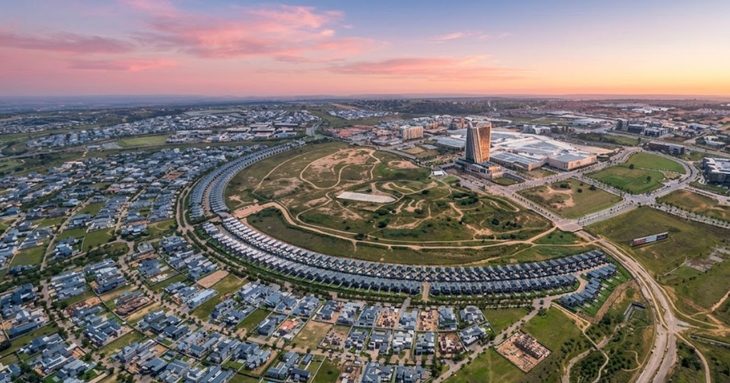
How One Developer Built South Africa’s Premier Smart City
Halfway between Johannesburg and Pretoria, a publicly traded property company is doing work normally left to a municipality. Attacq is the master commercial developer of Waterfall City, a 2,200-hectare master-planned precinct in Midrand. The land is owned by the Waterfall Islamic Institute and developed under 99-year leases, meaning the city is built entirely on land managed through long-term leasehold agreements rather than traditional freehold sales.
Waterfall City is a multibillion-dollar smart-city development. About 40,000 people live there, and around 25,000 commute in each day. More than 8,000 homes are complete, against a long-term target of 21,000.
The precinct includes the 131,000-square-meter Mall of Africa and close to 600 stores across 10 shopping centers. It also features offices for firms such as PwC, Deloitte, and Accenture, alongside logistics parks, a data center, four hotels, a Netcare private hospital, and three private schools. Attacq’s own holdings cover about 527,000 square meters, support roughly 23,000 jobs, and are valued at about $865 million.
Attacq does more than sell plots. Through Attacq Waterfall Investment Company, which is 30% owned by South Africa’s Government Employees Pension Fund, it holds the development and leasehold rights. It also designs, finances, and builds the civic infrastructure a city government would normally supply.
It built the internal road network and upgraded surrounding roads. Six substations feed 180 MW of power to the precinct. The Mall of Africa’s roof carries 15,000 solar panels, part of 18.5 MWp of rooftop solar across Attacq’s portfolio. A water resilience program equips every asset with two to five days of emergency reserves, with about 10 megaliters installed so far. Security runs through a private network of 1,600 CCTV cameras, 600 of them equipped with facial recognition. The company describes these investments as the price of giving tenants certainty in a province with strained public infrastructure.
The build-out continues. As of June 2026, about 85,000 square meters worth $133 million was under construction or approved, with delivery running to 2028. Projects include the Gateway East office building, the 20-story, 217-unit Aspire residential tower, the Waterfall City Junction logistics park, and a conference center with a 180-room hotel. Longer term, the company has earmarked about $1.2 billion for the precinct.
Acting as both master developer and quasi-municipal manager is rare for a property company. That makes Waterfall City a useful reference point for private new-city efforts such as California Forever in the United States, which also aims to build self-sustaining urban centers from scratch with private capital.
Can Geothermal Power Work Anywhere? Fervo Is Finding Out
You may have missed it, but geothermal energy just hit a major milestone. A few weeks ago, Fervo Energy’s Cape Station in Utah began sending electricity to the grid, becoming the first real test of whether enhanced geothermal can deliver power at utility scale.
Geothermal energy offers a potential alternative to fossil fuels, with a key advantage over solar and wind: it can generate electricity around the clock. But conventional geothermal development is geographically limited because it depends on naturally occurring combinations of underground heat, water and permeable rock.
Fervo is seeking to overcome that constraint by engineering geothermal reservoirs in hot, dry rock and applying drilling techniques adapted from the oil and gas industry. Its approach is designed to make geothermal power viable in locations that lack conventional geothermal resources.
The company’s enhanced geothermal system (EGS) uses deep horizontal wells to circulate water through high-temperature rock formations. The heated water returns to the surface, where the captured energy drives organic Rankine cycle turbines. The cooled water is then reinjected underground to repeat the process. Fiber-optic sensors monitor underground temperature, pressure and fluid movement, helping Fervo manage the engineered reservoirs.
Cape Station is Fervo’s first major test of this approach at utility scale. The project is being developed in phases, beginning with 100 megawatts (MW) of capacity across three 33-MW generating units, known as GeoBlocks. Its first GeoBlock entered commercial operation on September 30. The remaining two units are expected to enter commercial operation by January 1, 2027.
A second phase will add 400 MW through eight additional 50-MW GeoBlocks, with completion targeted for 2028. The project also has permits for potential expansion to as much as 2 gigawatts (GW).
Fervo has secured approximately 900 MW in power purchase agreements for Cape Station. Southern California Edison signed two 15-year contracts totaling 320 MW, while California community choice aggregators contracted 53 MW. Google signed an agreement covering nearly 400 MW to support its data center infrastructure, and Shell Energy North America secured offtake for the initial generating capacity.
Whether Cape Station can establish a commercially viable model for enhanced geothermal will depend on its ability to deliver reliable electricity at competitive costs. Fervo’s second phase targets all-in costs of $5,500 per kilowatt, with a longer-term goal of about $3,000 per kilowatt.
If successful, the project could help make geothermal a scalable source of around-the-clock electricity.
Yulu Runs the Electric Fleet Behind India’s Delivery Economy
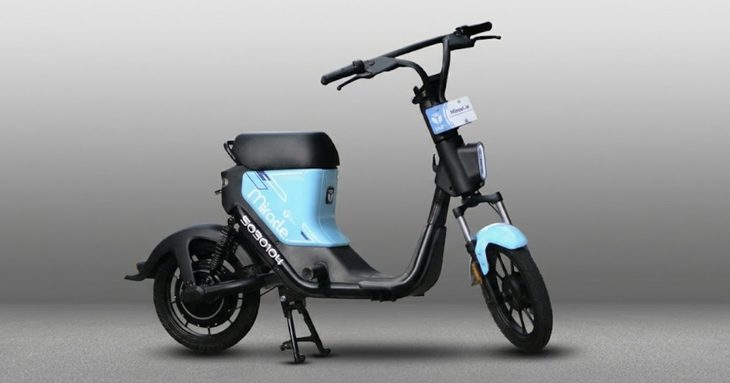
Many of the electric bikes carrying India’s 10-minute grocery deliveries don’t belong to the riders on them; they belong to Yulu, a Bengaluru startup that now plans to put far more of them on the road.
Yulu launched in 2017 as a bike-sharing app for commuters. When COVID hit and food and grocery delivery surged, the company found its real customer: gig workers. Today, about 95% of Yulu’s revenue comes from renting electric two-wheelers to delivery riders on weekly subscriptions. Riders take on no loan and make no down payment. They pay for the week, ride, and earn.
The operation runs at significant scale. Yulu has around 50,000 electric vehicles that power more than 750,000 deliveries a day and log about 1.6 million zero-emission miles every week. Its riders work for almost every major platform in India, including Amazon and Walmart-owned Flipkart. Yulu doesn’t sell to those platforms, however. Its customers are the riders themselves, so no third-party logistics company sits in the middle taking a cut. CEO Amit Gupta describes Yulu as the infrastructure layer underneath the delivery economy.
The model depends on keeping riders moving. Yulu’s sister company, Yuma Energy, operates a battery-swapping network where riders trade a dead battery for a full one and get straight back to work. Yuma designs and builds its own battery packs and charging units, now supplies other fleets, and makes batteries that work with more than 10 vehicle platforms. Yulu’s current fleet is built by Bajaj Auto, one of India’s biggest two-wheeler makers. With Bajaj building the bikes and Yuma powering them, Yulu controls the fleet, the energy, and the software.
Following a funding round of more than $90 million, Yulu plans to quadruple its fleet to 200,000 vehicles over two years. It also aims to expand from 12 cities to roughly 20 within a year, with Chennai and Pune on the list. Yulu runs its own operations in Bengaluru, Mumbai, Delhi-NCR, and Hyderabad, and works with franchise partners in eight other markets.
About a third of the new fleet will be Yulu Express, a full-size electric scooter, faster than its current bikes, built for bike taxis, parcel delivery, and longer e-commerce routes.
Shared mobility has a reputation for burning cash. Yulu took a different path, succeeding not by selling bikes but by renting the road to India’s gig economy.
Big Deals
- Panamint Capital obtains $1.8B loan for N. America’s largest brownfield renewable energy project.
- Agility Robotics to go public via SPAC as only U.S.-listed pure-play humanoid robot maker.
- Omega Healthcare, Foundation Partners acquire UK assisted-living portfolio for £615M.
- Brookfield, QIA to invest £2.5B in Drax data center.
- Nuveen buys $445M retail portfolio across three western states.
- Humble Robotics raises $51M to scale autonomous and electric freight.
- Metro Loft, David Werner Real Estate secure $231M loan to build Manhattan tower.
- Electric truck startup Harbinger lands $240M to expand product portfolio.
- Solar tracker maker Array merges with Shoals to form clean energy hardware platform.
- Zipline raises $1.5B to expand drone delivery.
Extra Reads
- Waymo confirms it’s breaking up with Uber in January 2028.
- India approves $10.4B investment in grid-scale energy storage.
- Spain adopts plan to improve high-speed rail safety.
- Panama Canal advances $8.5B expansion into logistics and energy.
- World Bank urges Africa to invest in urban planning as cities near 1.7B residents.
- China’s autonomous-driving suppliers shift focus to heavy-truck freight.
- Philadelphia plans to double its speed cameras to cut pedestrian deaths.
- California voters approve $11.25B housing bond, $25B down-payment program.
- Vietnam’s ROX Group plans $4.5B in Uzbek urban development projects.
- California’s largest new reservoir in 50 years secures key permit.
- Philippines advances nationwide cashless fare system for buses, jeepneys and trains.
- South Korea’s birth rate, the world’s lowest, rebounds on perks and weddings.