Here are the latest major stories and trends shaping the future of cities.
You Should Know
- Power grids in China, Australia, Japan, and India are rejecting record amounts of clean power as transmission capacity fails to keep pace with renewable energy growth. Reuters reports that China curtailed 360 TWh in H1 2026, which is enough clean energy to power Mexico for a year.
- U.S. mortgage rates, near 6.8% for a 30-year fixed loan, remain significantly higher than Eurozone rates (3% to 4.3%), where borrowing costs continue to drop following the European Central Bank’s rate-cutting cycle.
- Numbeo is a crowdsourced database that lets users compare cost of living, housing prices, crime rates, traffic, and quality-of-life metrics across thousands of cities worldwide. It’s useful for quick city-to-city comparisons.
Worth Watching
- China built a city that doesn’t need garbage trucks.
- Europe will be completely transformed after this tunnel.
- The highway loophole that created the worst town in America.
Top Stories
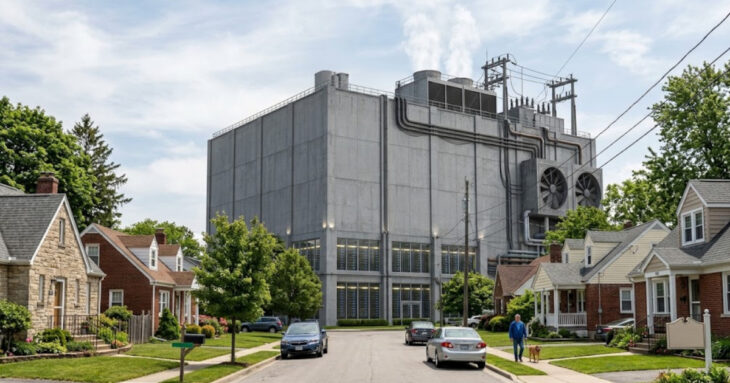
What Real Estate Agents Are Seeing as Data Centers Move In
Do data centers drive up or down real estate prices? Who better to ask than thousands of real estate agents.
The National Association of Realtors recently released its “2026 Data Center Impact Report,” analyzing more than 3,200 counties and surveying 2,357 real estate agents to gauge how the facilities affect housing, employment and utility costs nationwide.
The short answer: the survey’s data doesn’t show that a data center will automatically raise or lower residential real estate prices. Commercial real estate prices, however, may be impacted upward.
What is clear is that data centers are highly concentrated in relatively few counties. Researchers identified 1,474 data centers across 251 counties and found that 92% of the more than 3,200 counties tracked have no mapped facilities at all. Just 10 counties hold about 42% of the nation’s data centers, led by Loudoun County, Virginia, with 213 facilities, followed by Santa Clara County, California, with 75.
The report stated that home values in the U.S. counties with the heaviest concentration of data centers are more than double those in counties with none. However, the NAR attributes the elevated home values to broader demographic factors — these data-center-heavy counties tend to have higher incomes and more college-educated residents.
Agents surveyed were split on residential impact: 25% reported a positive effect on nearby home values, 22% a negative one, and roughly a third were unsure. On demand for nearby residential properties, 19% of agents saw an increase and 26% saw a decrease.
NAR notes that effects are highly localized, with outcomes varying even within a half-mile of a given facility. Agents’ clients’ top concerns were energy costs, cited by 61%, and water use, cited by 56%.
Unlike the mixed residential picture, the commercial sector — especially industrial property and land — benefited fairly consistently from nearby data center development, agents said. Half of surveyed Realtors reported higher nearby commercial property values, with about 22% citing gains over 10%. Demand followed suit: 42% reported increased demand for nearby commercial space overall.
That demand was strongest in specific property types: 58% of agents cited increased demand for industrial properties near data centers, and 38% cited land. The report tied this to the broader economic activity data centers generate, noting the facilities drive up industrial and commercial values by attracting infrastructure investment and related business development nearby.
For now, the clearest signal from the data is this: data centers are reshaping commercial real estate far more predictably than they are residential.

Heathrow’s Expansion: The World’s Most Expensive Airport Project
At £49 billion ($66 billion), Heathrow’s expansion plan carries a bigger price tag than any other major airport project currently underway in the world, far outpacing even the megaprojects reshaping the Middle East’s aviation landscape.
Why is it so expensive? The runway itself isn’t the problem — a single runway doesn’t cost tens of billions of dollars. What drives the price tag is where it has to be built: inside an already operating, intensely space-constrained airport in the middle of a megacity, without ever shutting the place down.
The runway component alone, which covers land acquisition, shifting a section of the M25 motorway into a new road tunnel, and building essential taxiways, is estimated at up to £33 billion ($44 billion). On top of that sits a brand-new terminal complex, known as T5X, plus a broader modernization of the airport’s existing infrastructure.
By comparison, megaprojects like Dubai’s $33 billion Al Maktoum International expansion or Saudi Arabia’s $30 billion King Salman International Airport are largely rising on open land, free of the added cost and complexity of threading construction through live runways, working terminals, and one of Europe’s busiest motorways.
For now, Heathrow’s expansion remains firmly in the planning stage. No concrete has been laid, and physical construction has yet to begin. Target completion sits somewhere between 2035 and 2040, contingent on Heathrow securing final statutory approval through a Development Consent Order (DCO).
The project is also financed differently than many of the state-backed megaprojects it’s being compared to. Heathrow operates as a privately funded, regulated utility asset, with capital spending moving through distinct price-control cycles overseen by the UK Civil Aviation Authority (CAA) rather than approved as a single lump-sum government commitment.
That structure is already generating friction. The CAA ruled in July that Heathrow can recover up to £320 million ($429 million) spent since 2025 on pre-construction planning, design, and legal work for its DCO application, funded through higher airline charges passed on to passengers over roughly 20 to 25 years.
Airlines have pushed back hard. British Airways, Heathrow’s largest carrier, argues that recovering costs this early shifts financial risk onto consumers before the project has a credible benefits case. That frustration is sharpened by the fact that Heathrow already charges passengers more than any other major airport in the world, currently about £26 ($35) per person.
Heathrow has rejected the criticism, pointing to Terminals 5 and 2 as megaprojects it delivered on time and on budget.
Balcony Solar Powers Up
Homeowners have long used rooftop solar panels to drastically cut their electricity bills. Plenty of apartment dwellers are cutting theirs too, without a roof in sight.
Nowhere is that more true than in Germany, where more than a million households have plugged solar panels into ordinary wall outlets, turning apartment balconies into a small but rapidly growing source of home-generated electricity.
Known as Balkonkraftwerke, these plug-in systems typically consist of one or two photovoltaic panels wired to a microinverter that converts panel output into standard household current. Each unit plugs directly into a wall socket, immediately offsetting a portion of a home’s grid draw.
In Germany, systems up to 800 watts require no permit or electrician, a threshold that has kept installation costs at roughly €300 to €600 ($340 to $685) and let owners recoup that spending in four to six years.
Germany remains the clear leader in the technology. Around 1.2 million balcony systems were registered with grid operators as of the spring of 2026, more than double the total from 18 months earlier. The country added roughly 3 gigawatts of balcony solar capacity in 2025.
A 2024 change to German tenancy law gave renters the explicit right to install the panels without landlord approval, fueling adoption in cities like Berlin and Munich. Consumer group Verbraucherzentrale estimates the systems cut annual electricity costs by €150 to €250 ($170 to $285) per household. Germany’s federal energy agency has proposed raising the wattage cap to 2,000 watts.
The U.S. is earlier in its adoption curve but is moving quickly. Utah became the first state to pass enabling legislation, and roughly 30 states had introduced or enacted similar measures by July 2026, including Maryland, Connecticut, Virginia, and Colorado. New Jersey enacted a law in early September barring landlords and municipalities from blocking residents from installing units up to 1,200 watts. Supporters say the panels could shave up to $50 off a typical monthly bill.
Drawbacks remain, particularly in the U.S., where regulators still lack settled safety standards for feeding power into household wiring from an outlet rather than a circuit breaker, an issue engineers call breaker-masking. A single unit also generally offsets only a modest share of household electricity use.
Even so, the German model suggests the technology can scale well beyond its current niche, especially as more states move to open the door to it.
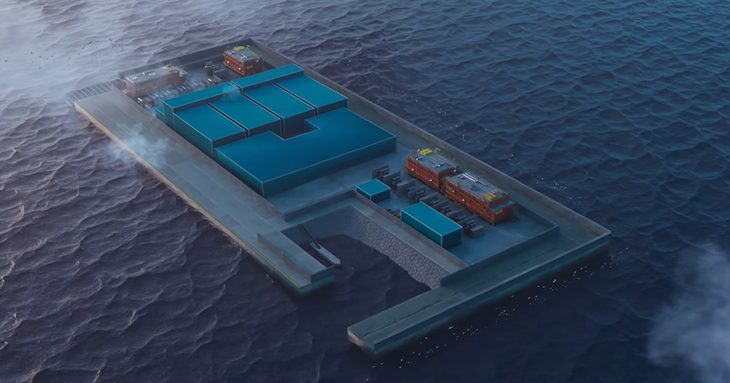
Princess Elisabeth Island: The First Artificial Energy Island
Forty-five kilometers off the Belgian coast, workers are assembling the world’s first artificial energy island, Princess Elisabeth Island. The island is a six-hectare structure engineered to gather offshore wind power from an entire wind zone and funnel it directly into Europe’s electricity grid.
Why build an island? An ordinary wind farm only needs to solve “how do we get this farm’s power to land.” Princess Elisabeth Island is solving a bigger problem: connecting an entire zone of current and future wind farms, plus international interconnectors, in one place rather than building several separate offshore platforms to do it piecemeal.
The island bundles export cables from wind farms across Belgium’s offshore wind zone and carries their power to shore, while also serving as a landing point for interconnectors to other countries, including a planned connection to the United Kingdom and links with British and Danish networks.
At 3.5 GW, the island represents a significant capacity addition for a small country, enough, by Elia’s own figures, to supply 3 million homes. What makes this project distinctive is the function: it isn’t a wind farm at all, but a piece of transmission infrastructure, the first artificial island purpose-built to combine AC and DC systems as a shared hub and international interconnection point at sea.
Around 60 kilometers of DC cables and 300 kilometers of AC cables run around the island, and 165 kilometers of undersea high-voltage cables, each carrying 220kV, connect it to the mainland via six three-phase AC lines. The island hosts both HVDC and HVAC systems, along with a high-voltage substation, switching stations, transformers, and a small harbor and helipad for maintenance crews.
The engineering behind it centers on 23 massive concrete caissons that form the island’s outer shell, each weighing about 22,000 tons. Beyond the engineering, the island was designed using a “nature-inclusive” approach, developed with conservation experts and scientists so its structure encourages biodiversity and marine life to flourish around it.
Progress has accelerated recently: installation of the final 23rd caisson was completed in August 2026, closing out the foundation phase that began in 2024. Weeks later, the European Investment Bank granted Elia a $1.16 billion (€1 billion) credit facility, its largest-ever loan for a single energy project in the Benelux.
Cable connections to the mainland are scheduled for 2027 and 2028, electrical installation work is set to begin in 2029, and the first offshore wind farms are set to connect from 2031, with full completion targeted the same year.
Big Deals
- Elon Musk’s tunnel startup The Boring Company raises $3B.
- Wint secures $36M to scale AI-powered water management solutions.
- European Investment Bank loans Portugal €1.5B to expand social housing.
- Starlight obtains £680M for a 6,000-home UK build-to-rent push.
- SL Green sells 110 Greene Street in NYC’s SoHo for $226M.
- Independence Realty Trust and Centerspace agree to an $8.1B merger, creating a leading apartment REIT.
- Beep lands $20M to accelerate commercial deployment of autonomous mobility networks.
- Qualitas Energy buys Cero Generation’s 5.8 GW European renewable energy portfolio.
- Skyborn raises more than $3.5B to build the Gennaker Wind Farm.
- Bluecore Energy secures $50M to create and deliver zero-emission energy.
- Broadcom pays $325M for its Irvine, CA campus.
- TAR raises $120M to build off-grid power for AI.
Extra Reads
- Panama Canal finds a water solution, but it is five years away.
- China halts approvals for new battery energy storage projects amid overcapacity concerns.
- EU unveils rules to help cities crack down on Airbnb rentals.
- San Francisco’s Candlestick Point project breaks ground on 7,200 homes after 25 years.
- Hamburg unlocks value from existing traffic data.
- Azizi launches $8.2B master-planned community in Sharjah, UAE.
- World’s largest renewable-powered off-grid utilities system begins operations.
- Valencia plans 1,500-hectare network of floodable metropolitan parks.
- Google plans to invest $15B in AI infrastructure in Finland.
- Cleveland is turning abandoned factories into new housing and jobs.
- Tata commits $7.4B to a 1 GW AI campus in Hyderabad.
- SunAsia and a Thai firm plan to build a $1B floating solar power project.
- York approves first 1,000 homes of £2B regeneration scheme.
- San Antonio plans $2.5B expansion for 15,000 public apartments.