Explore the latest major stories and trends shaping the next chapter of urban development.
You Should Know
- The most important U.S. affordable housing act in decades is coming. Read our first article below.
- Chevron and Microsoft have signed the largest, direct fossil-fuel-to-AI partnership ever executed. Dubbed Project Kilby, the deal bypasses traditional utilities entirely — the first time an oil & gas supermajor has vertically integrated to build an off-grid, behind-the-meter power plant for a data center.
- China’s humanoid robotics market is commercializing far faster than expected, prompting Morgan Stanley to nearly double its 2026 shipment forecast.
Worth Watching
- Egypt is building a new Nile.
- Your city should be building these intersections.
- Riyadh’s $23B park is bigger than Central Park and Hyde Park combined.
Top Stories

A Primer on the Most Important U.S. Affordable Housing Act in Decades
The 21st Century ROAD to Housing Act is the most significant effort to address housing affordability in the U.S. in a generation.
Equally remarkable is the bill’s overwhelming bipartisan support. It passed the Senate 85-5 and cleared the House 358-32 after years of negotiations between Republicans and Democrats.
And yet last Wednesday, President Trump refused to sign the bill, tying his signature to the SAVE America Act, a separate election bill requiring proof of citizenship for voters.
Despite the delay, the bill seems very likely to become law (even the prediction markets say so). Trump has a 10-day constitutional window to sign or veto it, after which it becomes law automatically. If he vetoes it, both chambers have margins large enough to override him — a rare outcome, having occurred only about 110 times in U.S. history.
What’s in the bill? Rather than relying on large new federal spending programs, it seeks to improve affordability by increasing housing supply and reducing barriers to building. These are the most significant reforms:
- Making it harder for large investors to buy more single-family homes. The legislation would prohibit certain institutional investors that already own at least 350 single-family homes from purchasing additional houses. The provision responds directly to concerns that corporate landlords — armed with cash offers — have been able to systematically outbid individual families in competitive markets.
- Speeding up home construction by cutting red tape. The bill creates a grant program to help communities develop preapproved housing design libraries — one of the more underappreciated reforms in the package. It matters because permitting delays add real cost to every home built. These libraries allow builders to skip redundant review processes, compressing timelines without requiring the federal government to override local zoning authority.
- Reducing the cost of manufactured housing. The bill removes the requirement that manufactured homes be built on a permanent steel chassis, which is unnecessary since most are installed on permanent foundations anyway. Housing experts estimate the change could lower construction costs by $5,000 to $10,000 per home.
- Rewarding communities that build more housing. The legislation directs federal incentives toward communities that approve new housing development, effectively penalizing jurisdictions that maintain restrictive zoning or slow permitting. The provision also mandates that HUD offer guidance on reforming zoning and land-use policies.
- Expanding affordable housing and mortgage programs. The package raises HUD’s multifamily loan limits for the first time since 2003, expands access to affordable housing initiatives and small-dollar mortgages, and simplifies construction activities across several federal housing programs.
Experts caution that even after enactment, the law’s effects on housing supply and prices will be gradual, as high mortgage rates, constrained inventory, and wage stagnation will not be resolved by any single piece of legislation.

The $28 Billion Plan to Remake Hanoi Around Its Red River
For most of its modern history, Hanoi has treated the Red River (Song Hong) mostly as an eastern boundary. That relationship is about to change, dramatically and expensively.
In May 2026, the Hanoi People’s Council formally approved the Red River Scenic Boulevard project, a roughly $28 billion undertaking covering over 11,000 hectares along both banks of the river. Stretching 80 kilometers through 16 wards and communes, the project is the centerpiece of a broader 100-year master plan to reposition the city as a globally competitive capital.
Hanoi’s push reflects a structural reckoning that decades of incremental planning failed to address. With more than 8.5 million permanent residents concentrated in the historic urban core, the city suffers chronic congestion, routine flooding, and some of the worst air pollution in Asia — with the population projected to reach between 16 and 19 million by 2065.
The Red River has sat largely outside this growth, treated as a flood-control buffer rather than an asset. The master plan marks a deliberate break, redistributing growth outward along ring roads and metro corridors, with both riverbanks becoming a corridor of public space, commercial activity, and new residential zones.
The physical build-out is substantial. Two scenic boulevard routes will run parallel to the river — the right-bank route stretching approximately 45 kilometers and the left-bank route spanning 35 kilometers.
Eleven riverside park clusters will cover thousands of hectares, with the Trang Viet park alone exceeding 1,100 hectares. The plan also includes embankment and rehabilitation works along roughly 65 kilometers of riverbank and commercial and cultural districts on both banks.
Cultural sites including the Bat Trang ceramics village and the Nhat Tan peach blossom area are planned for preservation rather than demolition.
Executing that vision, however, depends on financing that has already shown cracks. Of the six firms at the December 2025 project groundbreaking, four had withdrawn by May 2026. The Red River project operates under a build-transfer model, with private investors compensated through land allocation rights — an arrangement that has so far failed to hold the original consortium together.
The human cost is also significant. An estimated 200,000 people face relocation, with as many as 860,000 residents citywide potentially affected by 2045. Residents have responded with uncommon public dissent, and the city has pledged 85,000 new housing units across three resettlement zones in response.
How Iron, Water, and Air Are Becoming the Future of Grid-Scale Storage
Solar and wind follow the weather, not demand. Storing that energy and dispatching it when people actually need it has been the key to scaling renewables — and for the past decade, lithium-ion has been the technology making that possible.
The same chemistry powering smartphones and EVs became the default solution for grid-scale storage: efficient, fast-responding, and steadily cheaper. But as grids require storage measured in days rather than hours, lithium-ion’s limitations are becoming impossible to ignore.
Lithium-ion costs scale linearly with energy capacity, making it economically unworkable for multi-day storage. A new type of battery — iron-air — offers a different approach: storing electricity for 24 to 100 hours at a fraction of the cost by replacing expensive minerals with three abundant inputs: iron, water, and air.
The chemistry relies on a redox reaction between iron and oxygen. During discharge, the battery absorbs oxygen from the air, oxidizing iron into iron oxide — rust — and releasing electrons into an external circuit. To recharge, an electrical current reverses the process. No cobalt, no lithium, no rare earth supply chains.
Two companies are leading the commercialization effort. Form Energy, which manufactures its systems at a facility in West Virginia, has set a commercial target of around $20 per kilowatt-hour, compared to $250 to $400 for lithium-ion grid systems today.
In February 2026, Google committed $1 billion to deploy Form’s technology through Xcel Energy at a 30 GWh facility in Minnesota — one of the largest battery projects by energy capacity ever announced. A month later, Form added a 12 GWh agreement with AI infrastructure company Crusoe, with deliveries starting in 2027.
ORE Energy is leading the push in Europe. The company recently signed a 1 GWh agreement with Dutch energy supplier Budget Thuis — the largest iron-air deal in continental Europe to date — with a first phase of 400 MWh scheduled for 2028. The deal follows a completed pilot with EDF in France that demonstrated up to four days of grid-connected storage under real-world conditions.
Despite the technology’s progress, real limitations remain. Iron-air batteries are bulkier and less efficient than lithium-ion, with round-trip efficiency hovering around 45%. They are also poorly suited for applications requiring fast response or compact footprints.
But for grid-scale storage designed to hold cheap renewable energy for days at a time, those tradeoffs matter far less than cost and duration — and increasingly, utilities and data center operators are paying for exactly that.
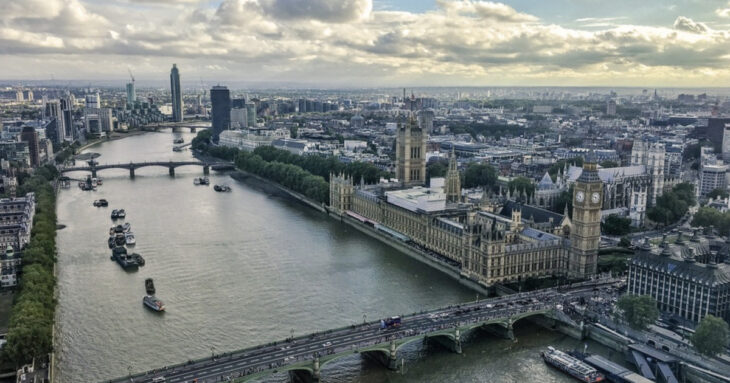
Record Heat Spurs London’s First-Ever Heat Adaptation Plan
Europe is emerging from an unprecedented June heatwave that shattered long-standing temperature records across the continent, and London was no exception. The city’s previous June temperature record of 35.6°C (96.1°F), which had stood since 1957, was completely obliterated.
High humidity compounded the heat, and with the vast majority of homes and public transportation vehicles lacking air conditioning, the event was particularly oppressive for residents.
In response, Mayor Sadiq Khan unveiled the city’s first-ever heat adaptation plan on June 25, 2026. Called Heat Ready London, the plan estimates that around one million London homes are at high risk of overheating, along with approximately 1,400 schools, 60 hospitals, and over 350 care homes. The city’s last major heatwave pushed the London Fire Brigade to its busiest day since World War II.
Heat Ready London sets five objectives: protecting residents from health impacts, reducing inequality among the most vulnerable, adapting buildings and green spaces, maintaining essential services, and supporting economic resilience.
Its 37 priority areas span near- and long-term action across six sectors: the built environment, business and economy, emergency preparedness, health and care, green space and nature, and infrastructure. On the built environment, the plan calls for retrofitting the highest-risk homes to curb indoor overheating and expanding urban tree cover in priority areas for long-term cooling.
Public access improvements include more cooling spaces, expanded water refill points, and broader access to blue spaces such as London’s waterways.
On infrastructure, Transport for London (TfL) is upgrading network resilience: 192 air-conditioned Tube trains now cover roughly 40 percent of the Underground, all London Overground and Elizabeth line trains are air-conditioned, new Piccadilly line and DLR trains are on the way, and all new double-decker buses include air cooling.
London is a relative latecomer on heat-health action plans. Paris, Rome, Lisbon, Amsterdam, and Brussels have already introduced comprehensive strategies. Paris expanded its response after the 2003 heatwave with cooling centers, greener streets, shaded schoolyards, and one of the world’s largest district cooling networks. Madrid halts outdoor construction during peak heat, Vienna deploys vehicle-free “cool streets,” and Athens names its heatwaves, borrowing a communication strategy from hurricane tracking.
Big Deals
- MGX raises $50B to set up one of the biggest AI funds ever.
- X-Caliber, CastleGreen lend $431M for Hawaii resort redevelopment.
- Building-materials supplier CRH to buy rival Arcosa for $8.5B.
- Blackstone purchases San Francisco Hyatt Regency for $279M.
- Terawatt secures $300M in debt financing to expand autonomous vehicle infrastructure platform.
- Parliament Energy secures $747M in financing for Texas solar project.
- The Richman Group closes $535M in two Low-Income Housing Tax Credit funds.
- Enlight closes $2.6B debt financing for 1.2 GW solar + 4 GWh storage complex in Arizona.
- Arctos backs $288M Tennessee stadium district in college sports push.
Extra Reads
- U.S. Department of Energy offers $17.5B in loans to accelerate 10 new large nuclear reactors.
- MIDAR, Majid Al Futtaim sign $3.1B partnership to develop mixed-use project in New Cairo.
- Read Harvard’s 2026 State of Housing Report.
- Why Uber’s business model gives it an edge against robotaxis in the ride-hailing race.
- China’s 6G tech turns every wall and pipe into a sensor.
- Hanoi starts construction on five urban railway projects worth $49.4B.
- Bloomberg Philanthropies commits $285M to help clean energy scale.
- NYC rent freeze approved for about one million regulated apartments.
- Chain’s first national-level special plan for urban regeneration issued.
- Lotte Group and Phat Dat sign deal for $2.3B eco smart city in Ho Chi Minh City.
- Canada names first three major projects that could be fast-tracked in national interest.
- Foster + Partners reveals agricultural city master plan in southern Oman.
- Amazon’s Zoox unveils redesigned robotaxi ahead of full-scale manufacturing launch.
- UN adopts first-ever global rules allowing fully autonomous vehicles.