
American higher education is in the middle of a structural contraction. The country’s smaller colleges are closing at a rapid rate. While that contraction represents a genuine crisis for the academic sector, closed college redevelopment is producing urban development opportunities at a rare scale across the country.
The Rate of Closure Is Accelerating
According to tracking by BestColleges, at least 49 nonprofit colleges have closed or announced closures since 2020, while more than 40 mergers have been announced. A December 2024 Federal Reserve Bank of Philadelphia report found that even a gradual 15 percent enrollment decline could produce 4.6 additional closures per year — and under a worst-case scenario, up to 80 institutions could shutter in a single year, displacing more than 100,000 students at once.
The first months of 2026 offered a preview of what acceleration looks like in practice: Syracuse University bought out 175 faculty members, Iowa State University moved to close or consolidate 23 programs, Portland State and the New School both announced large-scale reductions, and East Carolina University said it would discontinue 44 undergraduate and graduate programs.
Why Colleges Are Closing
The forces behind this contraction have been building for decades. They are now arriving at once. The number of 18-year-olds in America is projected to fall 13 percent between 2026 and 2041 — a demographic reality that has been visible on population charts for years but is only now hitting enrollment rolls in full force.
The revenue model has frayed at the same time. Tuition discount rates at private nonprofit colleges reached a record average of 51 percent in 2022, meaning institutions were effectively collecting half their published price. Operating costs, driven by healthcare, administration, and deferred maintenance, have outpaced general inflation for years.
For-profit colleges once led closure rates. Private nonprofits — smaller, more tuition-dependent, and more deeply rooted in specific communities — have now overtaken them. The institutions at greatest risk share a consistent profile: modest endowments, heavy reliance on tuition revenue, located in regions where the youth population is already shrinking.
Elite research universities and large public flagships remain largely insulated. The schools facing existential pressure are the ones that have served as economic anchors for mid-sized cities and small towns — which is part of what makes their closures both a civic loss and, in many markets, a closed college redevelopment opportunity.
The Assets That Get Left Behind
Assembling a large, contiguous parcel in a mature urban or suburban neighborhood typically takes years. It requires negotiating with dozens of property owners, working through layers of permitting, and installing the backbone infrastructure that makes dense development viable. A shuttered college campus eliminates most of that in a single transaction.
What a closed campus delivers is a self-contained ecosystem that was built — at considerable expense, over many decades — to house, feed, and provide services to hundreds or thousands of people simultaneously. That infrastructure doesn’t evaporate when the institution closes. It waits.
Land at scale. Many campuses range from 25 to 240 acres, contiguous and transferable in a single deal. Conventional parcel assembly of that size in an established neighborhood is rarely achievable at any price.
Built infrastructure. Internal road networks, high-capacity utility connections, district heating and cooling systems, fiber-optic connectivity, and parking structures are already in place. A developer inherits rather than builds this layer.
Convertible buildings. Dormitories are structurally suited to multi-family apartment or senior housing conversion — the plumbing and electrical systems already serve high-density residential use. Administrative buildings transition cleanly to medical office, coworking, or commercial space. Dining halls, libraries, and athletic centers function as community amenities from day one.
Location. Unlike raw land on the urban fringe, historic campuses are typically embedded inside walkable neighborhoods or near established transit corridors. In the Northeast and Midwest — where closures are most concentrated — many of these sites sit adjacent to downtown cores, commuter rail stops, and hospital districts. These are not marginal parcels. They are often the most strategically positioned sites in their cities, and they have not been available at any price for generations.
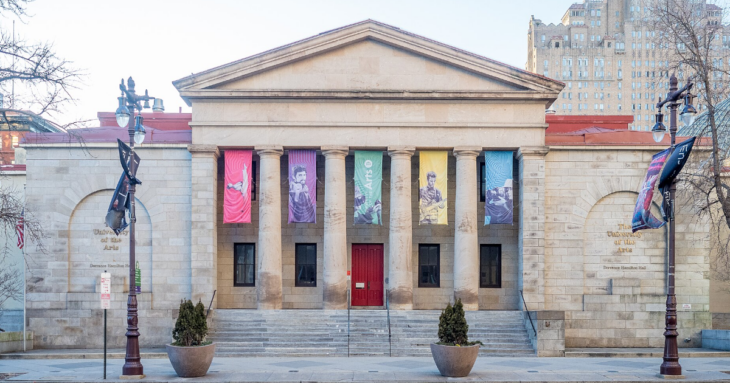
Four Closed College Redevelopment Models Worth Understanding
Successful closed campus redevelopment has many playbooks. The projects that have advanced furthest tend to fall into one of four approaches — each suited to different market conditions, site characteristics, and community needs.
The Public-Private Reset applies when local or county government steps in as an intermediary, acquiring campus assets and orchestrating a hybrid disposition strategy rather than selling the entire site to a single developer. Public assets — arts centers, civic spaces, green infrastructure — are retained or transferred to institutions. Private residential and commercial components are sold or leased to developers. The municipality captures the upside of restored property tax revenue while retaining control over community-sensitive outcomes.
The Mixed-Use Micro-Village is the most ambitious model: a developer master-plans the entire campus into a layered new district, treating existing academic buildings as structural anchors and programming the site with residential, retail, civic, and green space uses. These projects work best on larger sites where the existing building stock is architecturally significant enough to anchor a neighborhood identity. They also move faster than most developers expect, because municipalities are highly motivated to resolve what would otherwise become a blighted, fenced-off liability.
The Single-Use Conversion is the most direct path: a developer or mission-driven organization acquires the campus and converts it to one primary use — typically senior living, workforce housing, a healthcare campus, or a hospitality project. These transactions close faster, require less complex entitlement, and often achieve the strongest returns on a per-unit or per-square-foot basis, precisely because the conversion logic is clear and the building stock is already suited to the end use.
The University Takeover works when a financially stable institution sits close enough to absorb a closing campus. One university acquires another’s physical plant, preserves the academic character of the neighborhood, and bypasses municipal rezoning entirely. Speed and community acceptance are the primary advantages. The risk is that the acquiring institution needs a genuine programmatic use for the site — not just an opportunistic land hold.
Redevelopment Projects That Show What Is Possible
The following former college redevelopment projects illustrate the range of outcomes that are possible when the right developer, institution, or government agency matches a closed campus to an unmet community need.
College of Saint Rose → Albany County Public-Private Hybrid
When the College of Saint Rose collapsed financially, a county land authority stepped in rather than ceding the entire campus to a single developer. The result served multiple objectives at once: Hudson Valley Community College acquired the arts center, UAlbany converted dormitories into student apartments, and dozens of residential properties the college had owned across the neighborhood were returned to the local homeownership market. Public governance held the center while each party — regional institutions, private developers, city agencies — absorbed the piece best suited to its mission.
Newbury College → The Newbury of Brookline
Newbury College closed in 2019 and its campus in Brookline’s Frederick Law Olmsted-designed Fisher Hill neighborhood sold for $34 million. Developer HYM Investment Group converted the site into a 159-residence senior living community combining independent living, assisted living, and memory care. An 1896 mansion that served as the campus’s architectural centerpiece was preserved as a shared resident amenity; everything else was rebuilt as purpose-built senior housing. The project opened in December 2024 and its location — walkable, well-served by transit, embedded in an established neighborhood — made the senior living thesis straightforward.
Colorado Heights University → Loretto Heights
Westside Investment Partners acquired the 72-acre former Colorado Heights University campus in 2018 for $16.5 million and structured the shuttered campus redevelopment as a master-planned district rather than a single-use sale. A 1929 dormitory is now 74 units of affordable housing. A nonprofit received a $20 million EPA grant to convert the cafeteria into a community resilience hub. In 2025, Denver’s Arts & Venues agency began renovating the campus’s 1,000-seat theater as a cultural anchor for a part of the city that has long lacked major gathering spaces. At full build-out, the site is projected to contain 1,400 units of housing plus retail and restaurants.
Dana College → Dana Suites Workforce Housing
When Dana College closed in 2010 in Blair, Nebraska, it eliminated 150 jobs and worsened an existing housing shortage. The city partnered with regional agencies to convert a 1960s dormitory into a 12-unit workforce apartment complex for working families. Dana Suites filled immediately, maintained a waiting list, and generated more property tax revenue than the college had in its final years. The logic was simple: a building designed to house people was converted to house different people, at lower cost than ground-up construction, in direct response to what the local economy needed.
Mount Ida College → UMass Amherst Mount Ida Campus
When Mount Ida College shut down abruptly in 2018, UMass Amherst acquired the 74-acre Newton campus for $75 million and converted it into a satellite facility serving the Greater Boston market — giving a Western Massachusetts flagship a foothold in the region’s most competitive professional corridor without a single municipal rezoning proceeding. The campus layout was preserved entirely, with existing buildings reprogrammed for internship coordination, career development, and programs including veterinary technology. It moved at a speed private development rarely achieves on a parcel that size.
The Challenges That Can Stall Even the Best Projects
The opportunity is real. The complications are equally real, and experienced developers treat them as pricing variables rather than surprises. Closed college redevelopment projects carry a consistent set of hurdles that can stall even the most promising sites.
Most campuses carry institutional zoning that blocks commercial or dense residential redevelopment, forcing developers to negotiate new entitlements with local governments. Cities often want new tax revenue but remain cautious about neighborhood opposition and overdevelopment concerns.
Older campus buildings frequently carry landmark protections that limit demolition and major alterations, making renovations far more expensive than new construction. Developers often depend on federal and state Historic Tax Credits to make these projects financially viable.
Financially troubled colleges often come with deferred maintenance, environmental issues, and creditor disputes that make acquisitions unusually complex. In many cases, the institution’s financial history becomes as important as the condition of the real estate itself.
Neighborhoods often have deep emotional ties to longtime campuses and resist redevelopment plans that appear imposed from the outside. Developers who engage residents early and help shape a shared vision generally move projects forward faster and with less opposition.
There will be many more college closures before the higher education sector stabilizes. Moody’s and Fitch continue to warn about financial pressure on smaller colleges, while demographic declines are expected to persist for years. That means more academic real estate will enter the market — often in some of the most valuable locations in their cities. Closed college redevelopment may define the next generation of urban infill — emerging not from vacant land at the edge of cities, but from the campuses that once anchored them.