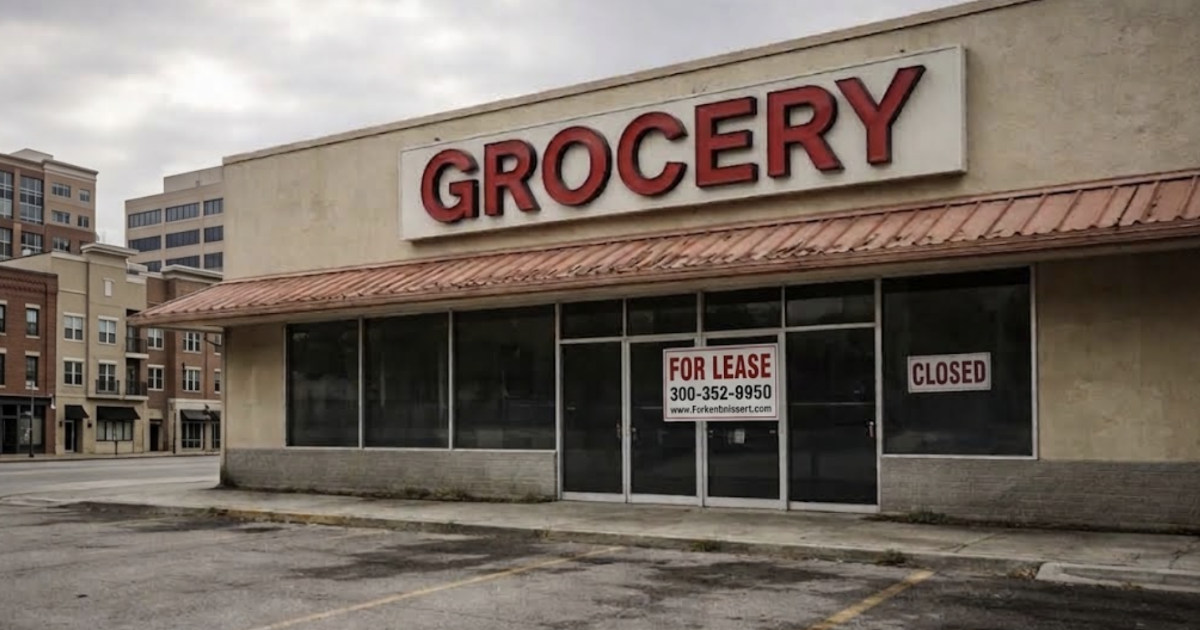
A supermarket doesn’t open where people need groceries. It opens where the numbers work.
That distinction helps explain one of the stranger contradictions in urban development: neighborhoods can have thousands of potential customers and still go years without attracting a full-service grocer.
For residents, grocery access is largely a question of proximity and transportation. For retailers, it is a calculation involving household spending, population density, traffic, competition, available real estate, development costs and projected sales.
Sometimes those calculations point to the same neighborhood. Sometimes they don’t. Most food desert solutions start from the same assumption: find a retailer willing to take the risk.
For city planners and economic-development officials, the challenge is figuring out which parts of that equation can be changed.
Access Is More Than Distance
The USDA’s Food Access Research Atlas illustrates why transportation belongs in the development conversation. Its current measures include a low-access category for low-income census tracts where at least 100 households are more than one-half mile from a supermarket and have no vehicle access. The USDA also uses newer network-based measures that calculate access using actual road distance.
Half a mile looks different depending on how someone travels.
A household with a car can make a supermarket trip in minutes. A household without one may have to walk, use public transportation or arrange a ride—and then make the same trip carrying groceries home.
That makes grocery access partly a question of urban form. Where housing sits relative to retail, how streets connect neighborhoods and whether transit serves commercial corridors can determine whether a store is practically accessible.
The Real Estate Behind the Grocery Store
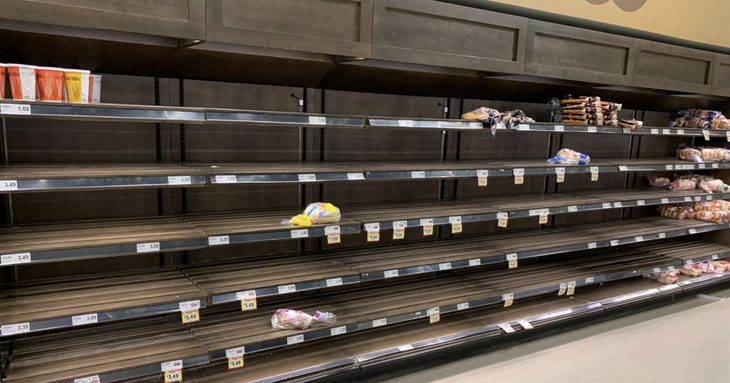
Grocery store development is one of the most capital-intensive forms of retail construction, and the grocery store itself is only the visible part of the equation.
A conventional supermarket needs a large site, parking, loading access, refrigeration, electrical capacity and substantial interior improvements. The retailer then needs enough customers and purchasing power to support the investment.
That creates a development problem in neighborhoods where demand exists but the economics do not immediately support a conventional store.
One response is to increase the number of potential customers within a retailer’s trade area.
Housing density can help. Mixed-use development can go further by putting residential customers directly next to commercial space. A grocery store surrounded by hundreds of apartments operates under a different set of conditions from one sitting on a suburban parcel that depends almost entirely on automobile traffic.
But density is not a magic number. Housing type, household income, transportation and the cost of the retail space still determine whether the grocery component works.
The objective is not simply to add units. It is to create enough useful density and connectivity to support the businesses those residents need. Density solves part of the equation, but few food desert solutions succeed on density alone.
Cities Can Change the Deal
Sometimes the barrier is not demand. It is the capital structure.
Oasis Fresh Market in North Tulsa provides a useful example. The full-service grocery store opened in 2021 after more than a decade without one in the area, but the project required an unconventional partnership.
According to the City of Tulsa, the city committed $1.5 million in Community Development Block Grant funding, helping attract investment from the Tulsa Development Authority, Tulsa Economic Development Corporation and philanthropic organizations. The total project cost reached approximately $6.1 million. The public and philanthropic participation also allowed the store to occupy its building at heavily subsidized rates.
That is an important distinction.
The city did not simply offer a retailer an incentive and hope the market responded. It helped alter the underlying real-estate economics of the project.
The location also connected the grocery investment to Tulsa’s transit network, reinforcing the idea that grocery access is not an isolated retail issue.
Oklahoma City Changed the Competitive Landscape
Oklahoma City used a different lever: zoning.
In 2019, the City Council imposed a moratorium on new small-box discount stores in the 73111 ZIP code of northeast Oklahoma City. The following January, the city created a Healthy Neighborhood Overlay District. New discount stores in the district had to either operate a pharmacy or dedicate at least 500 square feet to fresh produce and meat.
The policy addressed a different part of the grocery equation. Dollar stores and other small-box retailers can capture neighborhood spending with low-cost, shelf-stable goods while offering little fresh food. Restricting additional concentration does not guarantee that a supermarket will open, but it can change the competitive conditions a full-service grocer evaluates.
At roughly the same time, Oklahoma City was working with Homeland on a 30,000-square-foot grocery store at NE 36th Street and Lincoln Boulevard. Homeland announced in 2019 that it would invest $16 million in the project. The financing ultimately assembled to build it — about $8.5 million in New Markets Tax Credits, $3.5 million from a local tax-increment financing district and a $300,000 loan from Metafund, along with investor equity — totaled closer to $11 million to $12 million. The store opened in fall 2021.
The story since is a caution, not a clean ending. In early 2026, Homeland put the store up for sale amid company-wide financial troubles, and nonprofit RestoreOKC has raced to raise funds to keep it open, with no resolution yet. The point stands either way: opening a store doesn’t guarantee it survives.
The approach is the inverse of a traditional grocery incentive. Instead of only making a supermarket easier to build, Oklahoma City also made the competing retail environment part of the planning equation. It is a reminder that food desert solutions built entirely around subsidy can still fail for reasons no subsidy addresses.
Community Assets Can Start Smaller
A different approach is emerging in Dallas.
The nonprofit For Oak Cliff, based in Dallas, operates a farmers market at its community campus in South Oak Cliff. The market does not attempt to replicate a 40,000-square-foot supermarket. Instead, it uses an existing community asset to create a smaller-scale retail platform.
Dallas County reported that 4,780 customers attended the market across 31 market days in 2024, with 22 participating vendors.
The scale matters. A farmers market cannot provide the hours, inventory or purchasing volume of a full-service grocer.
Its value is that it lowers the threshold for participation. Vendors can test demand without opening a permanent store, residents gain another source of food, and an existing community facility becomes part of the neighborhood’s commercial infrastructure.
It is not a substitute for every grocery model. It is an example of how communities can begin building retail activity without waiting for a major supermarket investment.
New York City’s Municipal Grocery Plan
Much has been written about New York City Mayor Zohran Mamdani’s plan to open five city-owned municipal grocery stores — one in each borough. The mayor announced that the grocery stores will offer a 30% discount on fresh produce, meat, seafood and roughly 20 other categories of essential groceries. The city projects the discounts will reduce average grocery bills by 15%, or about $90 a month.
The first store is expected to open in Hunts Point by the end of 2027, with all five stores planned by the end of Mamdani’s first term. The city has allocated $70 million for the initiative.
Food Desert Solutions Start with a Better Question for Planners
These examples point toward a more specific development strategy.
Rather than treating grocery access as a retailer-recruitment problem, cities can treat it as neighborhood infrastructure.
That means evaluating grocery needs alongside housing density, transit routes, zoning, available public land and redevelopment sites. It also means designing incentives around measurable outcomes: affordable retail space, resident access, long-term store viability and protection against displacement.
Oasis shows how restructuring the capital stack can make a difficult grocery project pencil out. Oklahoma City shows how zoning can reshape the competitive landscape around a grocery site — and how that alone doesn’t guarantee a store’s long-term survival. For Oak Cliff shows how an existing community asset can support smaller-scale food retail. And New York City is testing direct public ownership as a further lever major cities can pull, not just subsidies or zoning. None of these examples is a universal template.
The practical takeaway is simpler: when a grocery store does not pencil on its own, change the conditions around the store rather than simply waiting for another retailer to try.
For planners and economic-development officials, that means identifying the missing piece — land, density, transportation, capital or retail space — and directing development policy at that constraint while protecting the residents already there.
The goal is not merely to put a grocery store in a neighborhood.
It is to make sure the neighborhood can still afford to use it when it arrives.